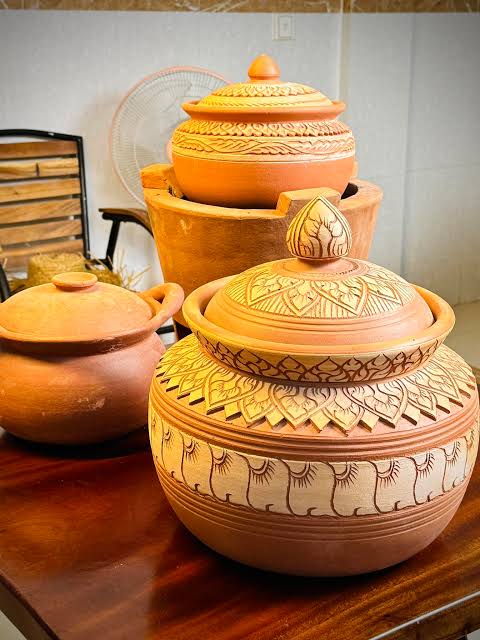
ឆ្នាំងដី
Chhnang dei · Clay cooking pot
Grandmother · Kampong ChamA chhnang dei is not a general-purpose pan. It is slow to come up to temperature, so it is used for the dishes that should be slow: kho, prahok-based soups, anything left to reduce while other work gets done. The slowness works in reverse once the pot leaves the fire — it stays hot long enough to serve from, which is why it goes straight to the table instead of being emptied into a bowl. Clay breaks, so a house tends to keep more than one, in more than one size.
Kampong Chhnang — "port of pottery" — is named for the trade that has defined it for centuries. Kilns and the wooden paddles used to shape pots, found at village sites there, have been dated to the 6th century, predating the Angkorian empire by hundreds of years. The village of Andong Russey is still the centre of production, where potters shape pieces entirely by hand from local beige clay rather than on a wheel, using paddle-and-anvil techniques kept within families.
Production declined after the fall of Angkor and again through the upheavals of the 20th century, before a revival in the early 2000s aimed at restoring the villages' traditional livelihoods. Cambodian Cookbook singles the clay pot out as the vessel for kho, valuing it for holding "low, even heat" suited to gentle braising and for being sturdy enough to carry the finished dish to the table.